


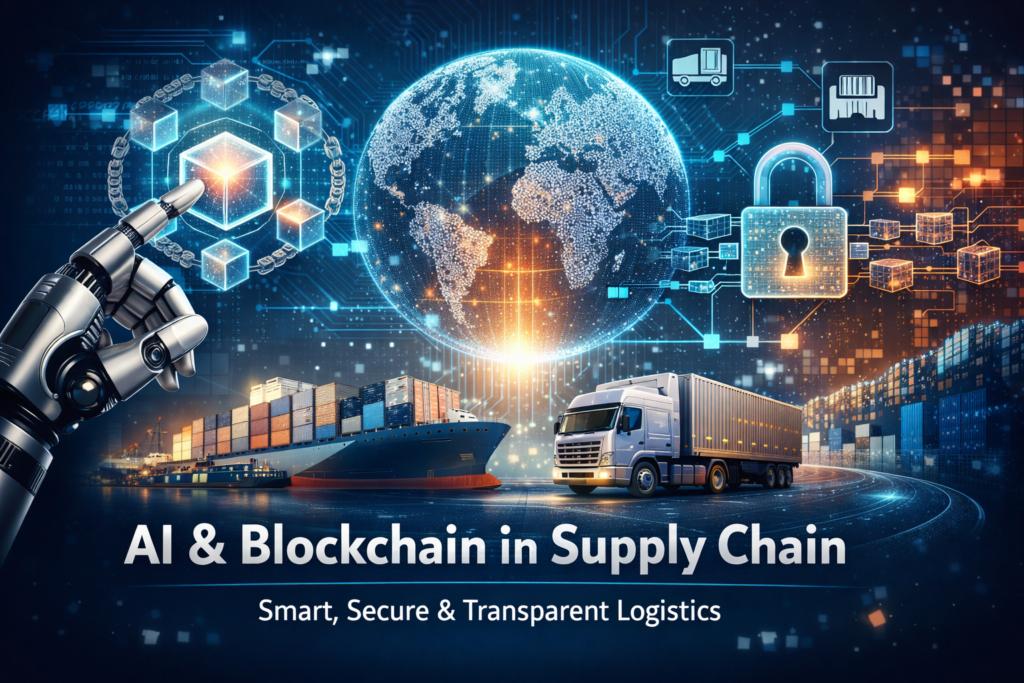
The global supply chain is undergoing a digital transformation. Traditional systems struggle with limited visibility, delayed decision-making, and data silos. By combining Artificial Intelligence (AI) with Blockchain technology, modern supply chains are becoming more transparent, intelligent, and resilient.
AI enables predictive insights and automation, while blockchain ensures data integrity and trust. Together, they create a powerful foundation for next-generation supply chain operations.
What Is an AI-Enabled Supply Chain?
An AI-enabled supply chain uses machine learning algorithms, data analytics, and automation to optimize every stage of the supply chain lifecycle.
Key Capabilities of AI in Supply Chains
- Demand forecasting using historical and real-time data
- Inventory optimization and automated replenishment
- Route optimization and logistics planning
- Predictive maintenance for assets and equipment
- Intelligent supplier selection and risk analysis
AI continuously learns from data, helping organizations respond faster to disruptions and market changes.
Role of Blockchain in Supply Chain Management
Blockchain is a distributed, immutable ledger that records transactions securely across multiple participants.
Core Benefits of Blockchain
- End-to-end traceability of goods
- Tamper-proof transaction records
- Increased trust between stakeholders
- Real-time auditability and compliance
- Secure data sharing without central control
Each transaction is permanently recorded, creating a single source of truth across the supply chain.
Why Combine AI and Blockchain?
AI and blockchain solve different but complementary problems.
| AI | Blockchain |
|---|---|
| Analyzes and predicts | Verifies and secures |
| Automates decisions | Builds trust |
| Optimizes performance | Ensures transparency |
When integrated, AI uses trusted blockchain data to generate accurate insights, while blockchain records AI-driven decisions and transactions securely.
Use Cases of AI + Blockchain in Supply Chains
1. Smart Demand Forecasting
AI predicts demand trends using blockchain-verified sales and shipment data, reducing forecasting errors and stockouts.
2. Transparent Product Traceability
Every product movement is recorded on blockchain, while AI analyzes patterns to detect delays, theft, or counterfeit risks.
3. Automated Smart Contracts
Blockchain smart contracts execute payments automatically when AI confirms delivery conditions are met.
4. Fraud Detection and Risk Management
AI flags anomalies in blockchain transaction data, helping prevent fraud and supplier non-compliance.
5. Sustainable and Ethical Sourcing
Blockchain proves origin and certifications, while AI evaluates supplier sustainability performance.
Benefits of AI-Enabled Blockchain Supply Chains
- Real-time visibility across the entire network
- Reduced operational costs
- Faster dispute resolution
- Improved compliance and auditing
- Higher customer trust and satisfaction
- Greater resilience against disruptions
Challenges and Considerations
While powerful, implementation requires careful planning:
- Data standardization across partners
- Integration with legacy systems
- Scalability and performance optimization
- Skilled workforce and governance models
A phased rollout with clear business objectives is key to success.
Future of Supply Chains
As global supply chains grow more complex, AI and blockchain will become essential technologies rather than optional upgrades. Organizations that adopt this combination early will gain a competitive advantage through agility, transparency, and intelligence.
Conclusion
AI-enabled supply chains powered by blockchain are redefining how goods move, decisions are made, and trust is established. By merging intelligence with transparency, businesses can build supply chains that are not only efficient but also secure, sustainable, and future-ready.